- Free Shipping Above Rs 599
- +91 97392 34467
- flavonn@gmail.com

KNOW ALL ABOUT ASHOKA TREE-ITS MEDICINAL BENEFITS

LICORICE/MULETHI POWDER/IRATTI MADHURAM PODI-how to use for face whitening
December 10, 2020Ashoka Bark- The main herb for Gynecological Disorders
October 29, 2025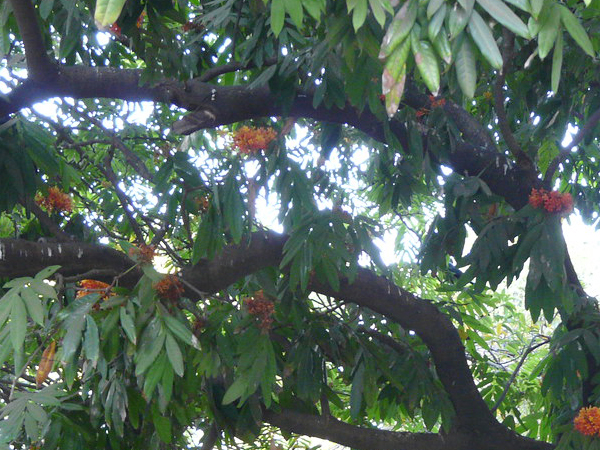
Saraca asoca, commonly known as ‘Ashoka Tree’ is a perennial, evergreen, medium-sized tree that belongs to the Fabaceae family. This tree is originated in India and is widely distributed in Khasi, Bengal, Orissa, Assam, and South region. Ashoka trees are commonly found in the Central and Eastern Himalayas and South India.
The Ashoka Tree extracts are considered as the key ingredient in Ayurvedic medicine for treating several diseases.Mainly Ashoka tree bark, flowers, roots and seeds are used in treatment.
Ashoka Tree Names In Different Languages
- English : Ashoka
- Tamil : Asogu / Asokam
- Malayalam : Asokam
- Telugu : Asokamu
- Kannada : Ashoka / Kenkali Achange
- Hindi : Seetha-Ashok Chhaal/ Ashoka ka Patta / Asok-Anganapriya
- Bengali : Asok
- Gujarati : Asupala
- Konkani : Ashok
- Marathi : Seethecha Ashok
- Oriya : Asoka
- Punjabi : Asok
- Tulu : Asoka
What are the synonyms of Ashoka?
Saraca asoca, Asok Tree, Ashokadamara, Ashokamara, Kankalimara, Asokam, Asok, Asogam, Asogu, Asokam, Ashokapatta, Anganpriya, Oshok, Asupala, Ashopalav, Kankelimaram[1].
Nutrient Value :
The Ashoka tree’s dried bark contains tannins, flavonoids, phytosterols, alkanes, esters, anthocyanin pigments, fatty acids and carbohydrate The powered bark of the tree also contains Aluminum, strontium, calcium, iron etc.
The bark, seeds, flowers, and leaves of the tree are widely used for managing various health conditions.
The Bark:
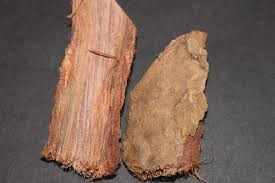
- Ashoka bark is considered particularly effective for female infertility and endometriosis.
- The chemical components present in the bark are very beneficial in managing several gynecological conditions in women, especially irregular menstruation and abnormal vaginal discharge.
- It alleviates abdominal pain, menstrual cramps, and excessive bleeding associated with menstruation.
- It helps to treat dyspepsia (indigestion), severe diarrhea, fibroids, cysts, and hemorrhoids (piles).
Flowers:
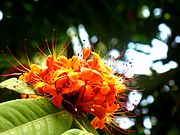
- The dried flower extract of Ashoka tree is widely used for improving skin complexion.
- It acts as blood purifier and removes toxins from the body.
- Ashoka tree is extensively used for preventing skin allergies and several skin diseases, such as scabies.
- Mixing dried flower extract of Ashoka tree with water and drinking it cures internal bleeding, syphilis (a type of sexually transmitted disease), diabetes, and severe diarrhea.
Seeds and Leaves:
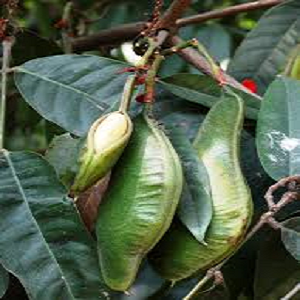
- The powder obtained from dried seeds of Ashoka tree is used to treat bone fractures and bladder stones.
- Consuming betel leaves with Ashoka tree seed powder extract wrapped in it helps in managing the symptoms of asthma.
- The tonic extracted from the leaves of the Ashoka tree is used to prevent blood loss in the stools and helps in removing worms from the stomach and reduces abdominal pain and inflammation.
- Besides these uses, it is also effective in the treatment of arthritis, difficulty in urination, ulcers, arrhythmia (irregular heartbeat), blood disorders, cancer, depression, and other health conditions.
What are the medicinal properties of Ashoka tree extracts?
Ashoka tree is rich in medicinal properties. The understanding of these properties will help us to better utilize this herb.
- Anti-cancer: Flavonoids, gallic acid, and phenolic compounds present in the bark extract of the Ashoka tree prevent the proliferation of cancer cells and causes cancer cell death.
- Antioxidant: Flavonoids and the phenolic compounds present in the Ashoka tree inhibits the release of free radicals and prevents cell damage.
- Anti-pyretic: Tannins and flavonoids present in the seed extract of the Ashoka tree tree reduce the elevated body temperature.
- Anti-inflammatory and Analgesic: Flavonoids present in the bark and dried flower extract of Ashoka tree are known to reduce pain and inflammation.
- Anti-bacterial: Flavonoids and phenolic compounds found in the bark and dried leaves extract ofAshoka tree inhibits the action of several bacteria.
- Anthelmintic: Alkaloids present in the bark extract of the Ashoka tree inhibits the activity of parasite and eliminates them.
- Anti-diabetic: Flavonoids present in the flower extract of Ashoka tree acts by inhibiting the action of certain enzymes that are responsible for the absorption of glucose.
Combinations of Ashoka tree
Ashok is combined with many other supporting herbs for specific diseases.
Regulate menstrual cycle: Haldi + Shatavari + Gulab
Strengthen the uterine muscles: Ashwagandha + Daruchini
Endometriosis and fibroids: Guggulu + Manjishtha + Haldi
Piles: Amalki + Mulethi + Shatavari
Health Benefits of Ashoka tree
Ashok tree bark is especially useful in the treatment of gynecological conditions such as endometriosis, cyst, fibroids, leucorrhoea, lower back pain, excess heat in the body, etc. It is very helpful in menorrhagia.
Menorrhagia (from Latin Meno=of mestruation and -Rrhag=to burst) is the medical condition of abnormally heavy or prolonged bleeding at menstruation. Menorrhagia also is known as Rakta yoni and Asrgdara in Ayurveda. Ashokarishta, which is decoction of Ashok bark along with many supporting herbs, is given to treat the same. This medicine is effective in curing infections of the uterus.
Ashok helps in abnormal vaginal bleeding due to its astringent action. It is an effective uterine tonic and strengthens the muscles of the uterus. It corrects the irregularity of periods and prevents miscarriage. Ashoka Ghrita is given after second trimester to prevent miscarriage.
If a woman has weak uterus muscles due to which she is suffering from miscarriage, she should take it regularly.
Ashoka does not causes contractions. The bark is stimulant to the endometrium and ovarian tissue.
Other Benefits
Whilst Ashoka really does shine as a herb to support women throughout each stage of their reproductive lives, other benefits include:
Anti-inflammatory – especially effective for the heart, Ashoka has been shown to protect cardiac tissues from infiltration by inflammatory cells.
Sleep Aid – The bark and seeds of Ashoka help to relax an overactive central nervous system, helping to reduce the time it takes to drop off to sleep. The quality and duration of sleep can be improved due to the presence of certain flavonoids, glycosides and tannins.
Skin Health – The root, bark and seeds of Ashoka are useful in the treatment of skin conditions including; eczema, acne, dermatitis, herpes scabies and psoriasis. It is also widely used to rejuvenate the complexion, reduce freckles and calm down inflammation.
Ashoka gives relief in swelling and is therefore given in gout, arthritis and rheumatism. It gives relief in pain and aggravated Vata.
It clears congestion and calms the nerves. It is a cold potency herb and pacifies excess pitta inside the body and hence gives relief in burning sensation in the body.
Ashok bark, detoxifies the body and improves the skin complexion.
Precautions
Not recommended for pregnant or breastfeeding women.
If you are taking prescription medication, please consult your healthcare professional before using Ashoka.
Source 1:https://livayur.com/ingredients/ashoka-saraca-asoca/
Source 2 : https://www.indigo-herbs.co.uk/natural-health-guide/benefits/ashoka